Li Bai (701-762) · Tang Dynasty
"蜀道之难,难于上青天"
"The road to Shu is harder than climbing to the blue sky"
Begin ExplorationWritten during the Tianbao era (745-746 CE), "Hard Roads in Shu" reflects Li Bai's profound observation of political turmoil and personal struggle.
The Tang Dynasty appeared prosperous on the surface, but beneath lay hidden crises. Emperor Xuanzong had grown indulgent in pleasure and neglected state affairs, delegating power to Chancellor Li Linfu. Regional military governors were gradually expanding their influence, and the Shu region's strategic location made it a coveted prize for warlords.
Li Bai, with his keen political insight, perceived the looming threat of regional separatism. The treacherous mountain paths described in his poem became a metaphor for the dangerous political landscape of his time.
Having been expelled from the capital due to his proud nature and conflicts with powerful officials, Li Bai channeled his frustration over thwarted ambitions into this masterpiece. The poem serves as both a personal lament and a veiled warning to the court about the vulnerability of Shu.
With its dramatic imagery, musical rhythm, and profound symbolism, "Hard Roads in Shu" stands as one of the greatest works in Chinese literature. The poem's famous opening line has become a proverb expressing the difficulty of any challenging endeavor.
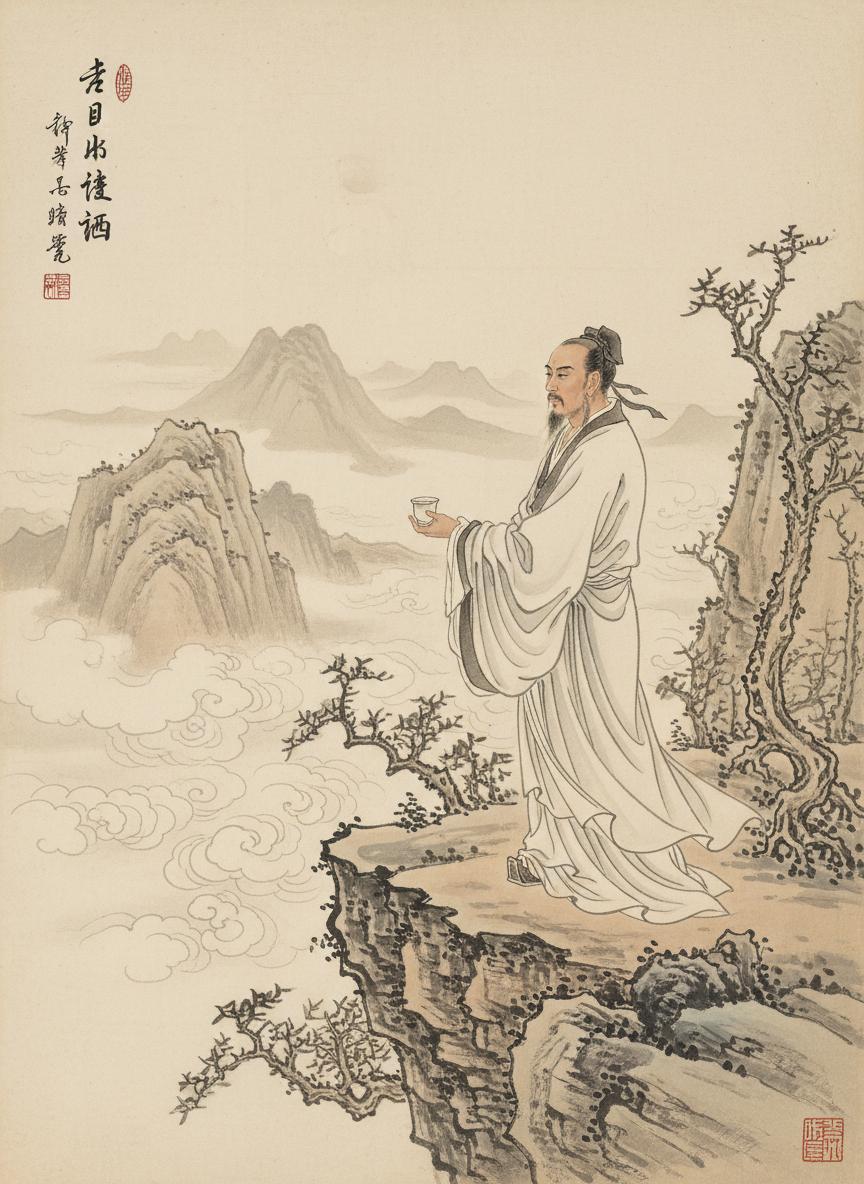
701-762 CE · The "Immortal Poet" of the Tang Dynasty
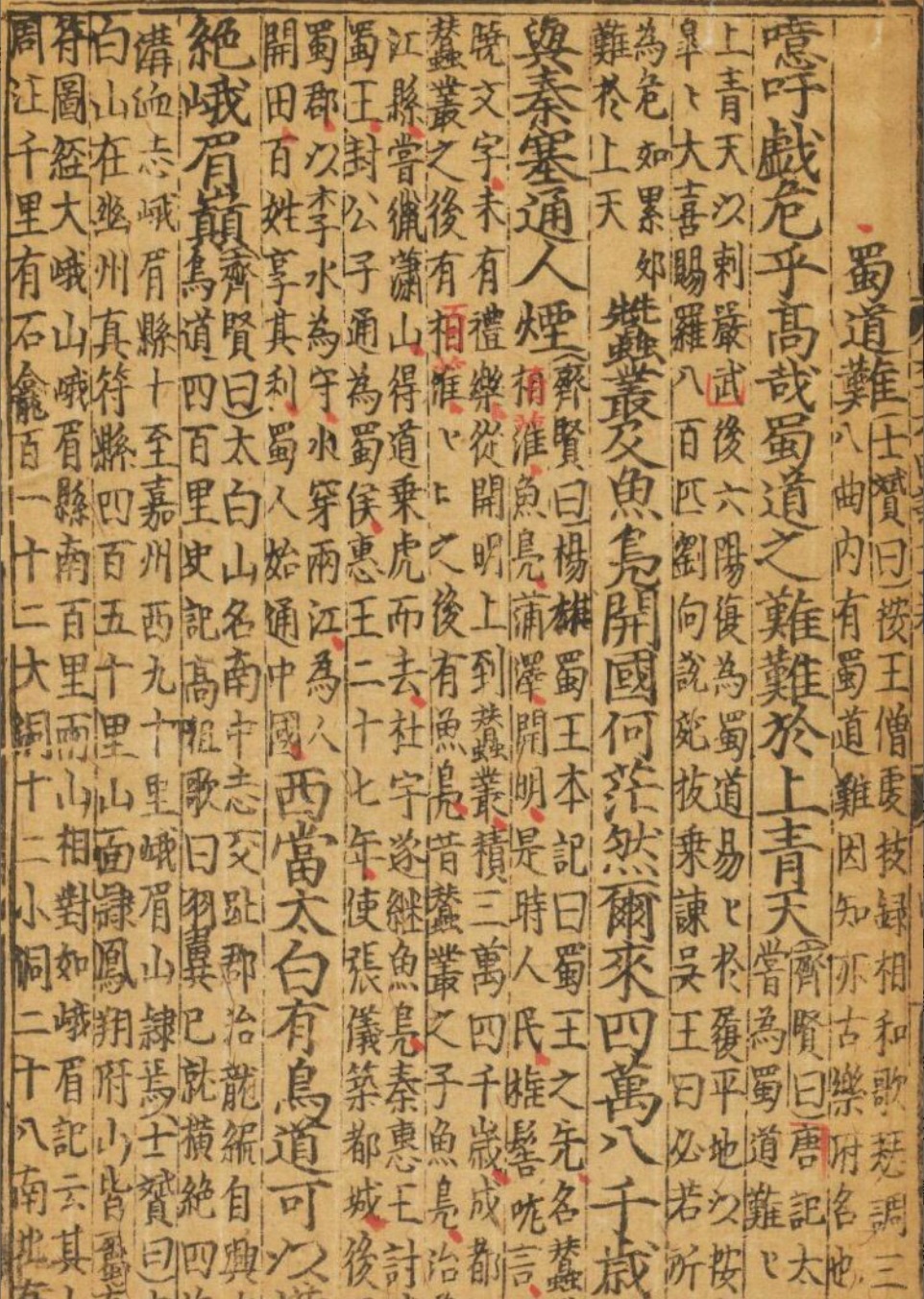
Explore Li Bai's masterpiece through the Song-dynasty annotated manuscript, textual collation with variant markings, and an English translation. Drag the manuscript to pan; use the +/- buttons to zoom.
Song Dynasty annotated edition — drag & zoom
Strikethrough = variant deleted; red superscript = revised reading · scroll for English translation
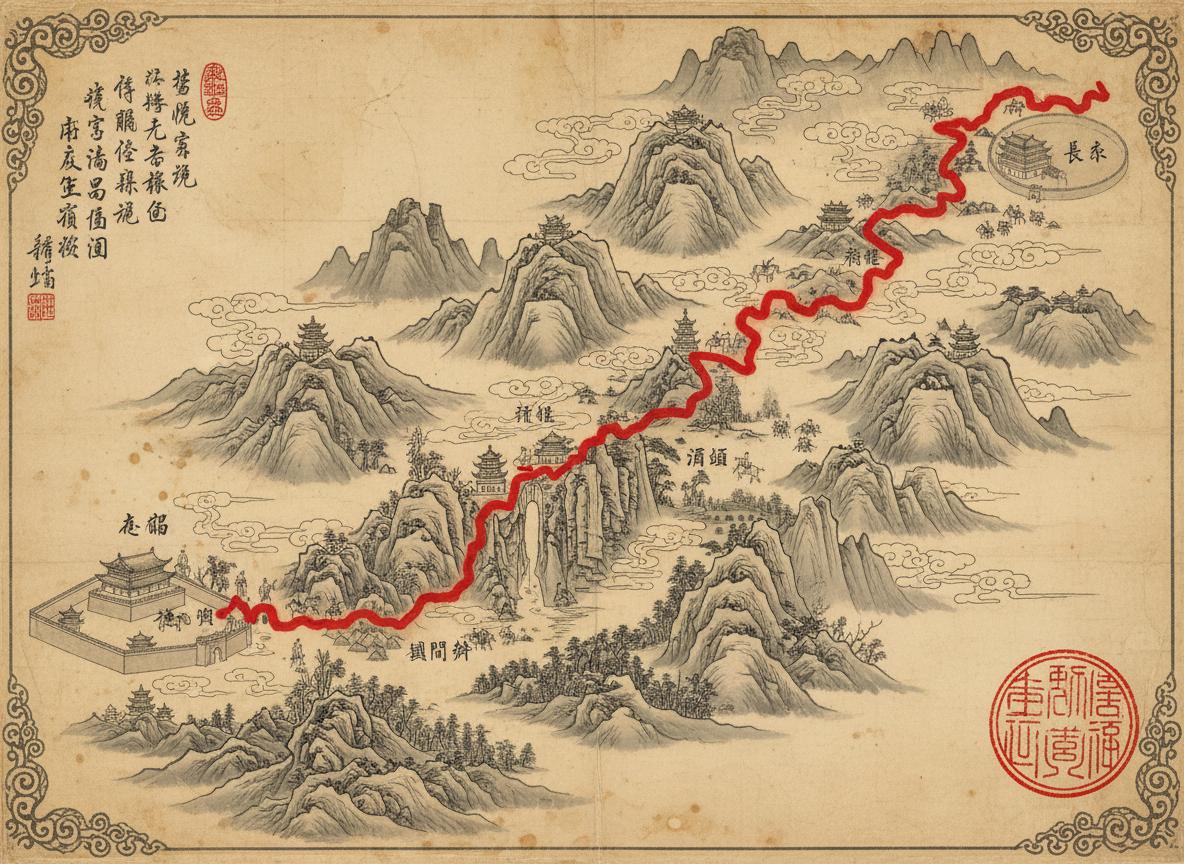
Click on the marked locations to explore the geographical references in Li Bai's poem. Discover ancient and modern place names, related verses, and historical significance.
Click on any location marker to discover its significance in Li Bai's poem.
Our vision for this digital humanities project and future directions for development.
This project was born from a passion for bridging classical Chinese literature with modern digital scholarship. We believe that ancient texts like "Hard Roads in Shu" deserve to be experienced in ways that honor their cultural depth while making them accessible to global audiences.
Our goal is to demonstrate how digital tools can illuminate traditional humanities research. By combining geographic visualization, bilingual textual analysis, and interactive mapping, we create new pathways for understanding and appreciating classical literature.
Planned updates include: TEI-encoded full text with scholarly annotations, audio recordings of traditional Chinese recitation, 3D terrain visualization of the Shu Road, comparative analysis with other Tang Dynasty travel poetry, and collaborative annotation features for scholars.
This platform can serve as a model for digital humanities projects examining other classical Chinese texts. The framework we've developed—combining textual analysis with geographic and historical context—can be adapted for studying poetry, historical documents, and literary journeys.
We envision this project being used in classrooms worldwide to teach Chinese literature, history, and digital humanities methods. Future versions will include guided tours, discussion prompts, and assignment modules for educators.
We hope to build a community of scholars, students, and enthusiasts passionate about classical Chinese literature. Future features may include forums for discussion, crowdsourced annotations, and collaborative research tools.
Meet the creators behind this digital humanities project.
Technical Development & Interaction Design
Yuming leads the technical implementation of the project, developing the interactive map functionality, bilingual reader interface, and overall user experience. With expertise in web development and digital humanities tools, Yuming ensures that the technical aspects serve the scholarly content effectively.
Reading Section & Content Curation
Jingtong is responsible for the bilingual reading experience, carefully curating the parallel text presentation and ensuring the accuracy of translations. With a background in classical Chinese literature, Jingtong brings scholarly depth to the project's textual content.
Both team members jointly contributed to the project conception, topic selection, and overall design logic. The project represents a collaborative effort combining technical expertise with literary scholarship to create a meaningful digital humanities experience.